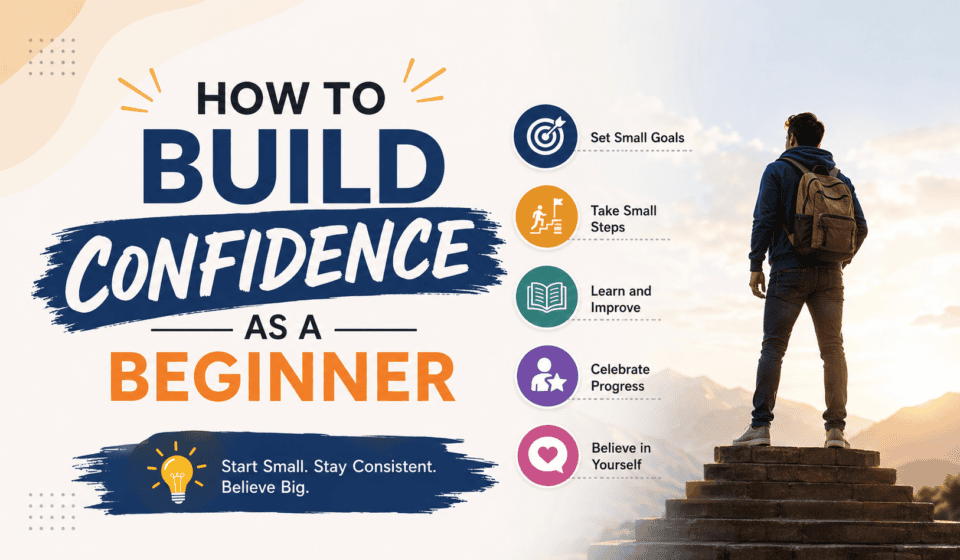

Starting something new can be exciting, but it can also feel intimidating. Whether you are learning web design, digital marketing, freelancing, programming, graphic design, or another professional skill, one challenge appears again and again: lack of confidence.
You may wonder, “Am I good enough?” “What if I make mistakes?” or “What if other people are better than me?”
These thoughts are completely normal when you are a beginner. The good news is that confidence is not something you must already have before you start. Confidence is built through learning, practice, small achievements, and experience.
If you are just beginning your career or learning journey, you do not need to become confident overnight. Instead, focus on taking small steps every day.
In this guide, you will learn practical ways to build confidence as a beginner and develop the mindset needed to keep improving.
What Is Confidence?
Confidence is your belief that you can handle a situation, learn a skill, solve a problem, or make progress.
Being confident does not mean believing that you know everything. A confident beginner can say:
“I don’t know this yet, but I can learn it.”
This mindset is much more useful than pretending to be an expert.
Confidence also does not mean that you will never feel nervous. You can feel nervous and still take action. In fact, many successful professionals continue to feel nervous when they try something new.
The difference is that they do not allow fear to completely stop them.
Why Do Beginners Lack Confidence?
There are several reasons beginners struggle with confidence.
1. You Compare Yourself With Experts
One of the biggest mistakes beginners make is comparing their first few weeks of learning with someone else’s years of experience.
For example, you might learn WordPress and see a professional designer creating beautiful websites. You may immediately think:
“I will never be able to do that.”
But you are comparing your beginning with someone else’s advanced stage.
Instead, compare yourself with your previous version.
Ask:
- What can I do today that I couldn’t do last month?
- What new skill have I learned?
- What mistake can I avoid now?
- What project can I complete today?
Progress becomes much easier to recognize when you compare yourself with yourself.
2. You Are Afraid of Making Mistakes
Many beginners believe that mistakes are evidence that they are not talented.
The opposite is usually true.
Mistakes are part of learning. When you make a mistake, you discover what does not work. You can then correct it and improve.
If you are learning website design, your first website may not look professional. Your layout might be confusing. Your colors might not work well together. Your mobile design may need improvement.
That is okay.
Your first project is supposed to teach you.
3. You Expect Immediate Results
Another reason beginners lose confidence is unrealistic expectations.
You may watch a few tutorials and expect to become an expert within a week. When that does not happen, you become frustrated.
Professional skills take time.
Instead of asking, “How quickly can I become an expert?” ask:
“What can I learn today?”
This simple change can make your learning journey much less stressful.
10 Practical Ways to Build Confidence as a Beginner
1. Start With Small Goals
One of the best ways to build confidence is to create small, achievable goals.
Do not start with a goal like:
“I want to become the best web designer.”
That goal is too large and difficult to measure.
Instead, create smaller goals such as:
- Learn basic HTML.
- Create one simple webpage.
- Learn how WordPress works.
- Design one landing page.
- Write your first blog post.
- Create a simple portfolio.
- Complete one small freelance project.
Every completed goal gives you evidence that you are capable of learning.
Small wins create momentum.
2. Learn One Skill at a Time
Beginners often try to learn everything simultaneously.
For example, someone starting digital freelancing might attempt to learn:
- Web design
- SEO
- Social media marketing
- Graphic design
- Video editing
- Email marketing
- Copywriting
- Paid advertising
Learning many unrelated skills at once can become overwhelming.
Choose one primary skill and focus on it.
For example:
Step 1: Learn HTML and CSS.
Step 2: Learn WordPress.
Step 3: Build websites.
Step 4: Learn basic SEO.
Step 5: Create a portfolio.
This approach gives your learning journey a clear direction.
3. Practice Every Day
Confidence grows through repeated action.
You do not necessarily need to practice for five hours every day. Even 30–60 minutes of focused practice can make a difference if you do it consistently.
For example, if you are learning web design, spend one day creating a header, another day designing a pricing section, and another day practicing responsive layouts.
If you are learning digital marketing, practice writing social media posts, researching keywords, analyzing websites, or creating simple campaigns.
The more you practice, the more familiar the skill becomes.
And familiarity reduces fear.
4. Create Real Projects
Watching tutorials can help you understand concepts, but creating projects is where confidence really develops.
Suppose you watch ten tutorials about WordPress.
You may understand many concepts, but you might still feel nervous about creating a website.
Instead, build one.
Create a fictional business website.
For example:
- Restaurant website
- Personal portfolio
- Fitness trainer website
- Photography website
- Local business website
- Freelancer portfolio
You do not need a real client.
Create projects for practice.
Once you have completed several projects, you will have something more valuable than theoretical knowledge: experience.
5. Keep a Record of Your Progress
Beginners often forget how much they have improved.
Create a simple progress journal.
At the end of each week, write down:
- What I learned
- What I completed
- What I found difficult
- What mistakes I made
- What I will learn next
After several weeks, look back at your notes.
You may be surprised by your progress.
For example, you might start with:
“I don’t know how to create a website.”
A few months later:
“I can build a WordPress website, customize its design, create pages, optimize content, and publish it online.”
That transformation builds genuine confidence.
6. Stop Trying to Be Perfect
Perfectionism can destroy beginner confidence.
You may spend hours trying to make your first project perfect. You may hesitate to publish your portfolio because you believe it is not good enough.
Instead, focus on improvement.
Your first website does not need to be your best website.
Your first article does not need to be your best article.
Your first freelance proposal does not need to be perfect.
You need to finish, learn, and improve.
A completed imperfect project teaches you more than an unfinished perfect idea.
7. Learn From People Who Are Ahead of You
Learning from experienced professionals can accelerate your development.
Follow people who are successful in your field. Study their work. Read their articles. Watch educational videos. Join professional communities.
But remember one important rule:
Learn from experts without constantly comparing yourself to them.
Their expertise should inspire you rather than discourage you.
Instead of thinking:
“I am not as good as them.”
Think:
“What can I learn from them?”
This changes comparison into education.
8. Challenge Yourself Gradually
Confidence grows when you step slightly outside your comfort zone.
Do not immediately choose the most difficult challenge.
Increase the difficulty gradually.
For example:
Level 1: Create a basic website.
Level 2: Create a responsive website.
Level 3: Build a website with multiple pages.
Level 4: Create a complete portfolio project.
Level 5: Build a website for a real person or small business.
Each level prepares you for the next.
This approach allows you to experience challenges without becoming overwhelmed.
9. Accept Constructive Feedback
Feedback can feel uncomfortable, especially when you are a beginner.
Someone might tell you that your website design needs improvement or that your writing is unclear.
Do not automatically interpret criticism as failure.
Ask:
“What can I learn from this feedback?”
Useful feedback helps you identify weaknesses that you may not notice yourself.
When someone gives you constructive criticism, listen carefully, make improvements, and try again.
Over time, feedback becomes a valuable part of your growth.
10. Take Action Even When You Feel Nervous
You do not need to wait until you feel completely confident.
This is one of the most important lessons for beginners.
Confidence often comes after action, not before it.
You may feel nervous before:
- Publishing your first article
- Showing someone your portfolio
- Applying for a freelance job
- Speaking to a client
- Creating a social media video
- Presenting your work
- Starting a new project
Take the action anyway.
After doing something several times, it becomes less frightening.
How to Build Confidence for Freelancing
If you want to become a freelancer, confidence is especially important.
You may initially feel uncomfortable communicating with clients or applying for projects.
Start small.
Create a professional portfolio with a few strong sample projects.
You can create fictional projects if you do not have client work yet.
Then practice:
- Writing proposals
- Introducing yourself
- Explaining your services
- Answering common client questions
- Discussing project requirements
- Presenting your work
You can even practice conversations with a friend.
The goal is to become comfortable communicating professionally.
Remember that clients do not necessarily expect beginners to know everything. They want someone who is reliable, communicates clearly, meets deadlines, and is willing to solve problems.
Build Confidence Through Your Portfolio
A portfolio can significantly increase your confidence because it provides evidence of your abilities.
Instead of saying:
“I think I can design websites.”
You can say:
“Here are several websites I have designed.”
That is much stronger.
Your beginner portfolio might include:
- Personal portfolio website
- Local business website
- Landing page
- E-commerce concept
- Trainer or coach website
Focus on quality rather than creating dozens of projects.
Three to five well-presented projects can be a good starting point.
How to Deal With Fear of Failure
Fear of failure is one of the biggest obstacles beginners face.
You may think:
“What if I fail?”
Try changing the question to:
“What will I learn if this doesn’t work?”
Failure becomes less frightening when you see it as information.
For example, if you apply for ten freelance jobs and receive no response, you have learned that something in your approach may need improvement.
You can review:
- Your profile
- Your portfolio
- Your proposal
- Your pricing
- Your communication
- The types of projects you are applying for
Then make adjustments.
Failure does not have to be the end of your journey. It can become part of your learning process.
Build Confidence by Improving Your Communication
Technical skills are important, but communication also plays a major role in confidence.
Practice explaining what you know in simple language.
For example, instead of using complicated technical terminology with a client, explain the benefit.
Rather than saying:
“I will optimize your website’s technical structure.”
You could explain:
“I will improve the website’s structure so visitors can navigate it more easily and search engines can better understand the pages.”
Clear communication makes you appear more professional and helps you feel more prepared.
Develop a Positive Learning Mindset
Your mindset can strongly influence your confidence.
Replace negative statements with realistic, positive ones.
Instead of:
“I can’t do this.”
Say:
“I haven’t learned this yet.”
Instead of:
“I am terrible at this.”
Say:
“I need more practice.”
Instead of:
“Everyone is better than me.”
Say:
“Other people have more experience, and I can learn from them.”
This is not about pretending everything is easy.
It is about recognizing that your current ability is not your permanent ability.
You can improve.
Create a Beginner Confidence Routine
A simple daily routine can help you stay consistent.
Try this:
30 Minutes of Learning
Learn one specific concept.
30 Minutes of Practice
Use what you learned to create something.
10 Minutes of Review
Write down what you learned and what you found difficult.
5 Minutes of Planning
Choose the next task you will complete.
This routine takes less than two hours but can create significant progress when followed consistently.
Celebrate Small Wins
Do not wait until you achieve a huge goal before celebrating progress.
Celebrate smaller achievements.
For example:
- Finished your first website
- Published your first article
- Learned a new tool
- Completed a difficult tutorial
- Received your first positive feedback
- Created your first portfolio
- Sent your first freelance proposal
- Completed your first client project
These achievements may seem small, but they are important milestones.
Every small win tells your brain:
“I can do this.”
Confidence Comes From Evidence
One of the most powerful ways to understand confidence is to think of it as evidence.
You become more confident when you repeatedly prove to yourself that you can take action, solve problems, learn new skills, and recover from mistakes.
For example:
You complete one project → confidence increases.
You complete another project → confidence increases again.
You solve a difficult problem → confidence increases.
You communicate successfully with a client → confidence increases.
Over time, these experiences create a strong foundation.
You no longer need to convince yourself that you can succeed because you have evidence from your own experience.
Final Thoughts
Building confidence as a beginner is a process, not a single event.
You do not need to know everything before starting. You do not need to be better than everyone else. And you do not need to eliminate fear before taking action.
Start small.
Learn consistently.
Practice regularly.
Create real projects.
Accept feedback.
Learn from mistakes.
Track your progress.
Most importantly, keep moving forward.
Your first attempt may not be excellent. Your first project may have mistakes. Your first client conversation may feel uncomfortable.
That is normal.
Every expert was once a beginner.
The difference between staying a beginner and becoming skilled is often the willingness to keep learning and practicing.
So, if you are starting a new skill today, do not ask yourself whether you are already good enough.
Ask yourself:
“What is one thing I can do today to become better?”
Take that step.
Then take another tomorrow.
With consistent effort, experience, and a willingness to learn, the confidence you are looking for will gradually become a natural result of your progress.