
Working with a new client can be exciting, but it can also create challenges if you do not clearly understand what the client needs. Miscommunication, unclear requirements, missing information, and frequent revisions can turn a simple project into a stressful experience.
A client questionnaire template is one of the easiest ways to solve these problems.
A well-designed client questionnaire helps you collect important information before starting a project. It gives you a clear understanding of your client’s goals, expectations, audience, preferences, budget, timeline, and requirements.
Whether you are a freelancer, web designer, graphic designer, digital marketer, SEO specialist, copywriter, photographer, consultant, coach, or agency, a client questionnaire can make your workflow more organized and professional.
In this guide, you will learn what a client questionnaire is, why you need one, what questions to include, and how to create a questionnaire that helps you deliver better results.
What Is a Client Questionnaire?
A client questionnaire is a structured list of questions that you send to a potential or new client before beginning a project.
The purpose is to gather the information you need to understand the client’s business, project requirements, goals, target audience, expectations, and preferences.
Instead of spending hours asking questions through emails, phone calls, or messages, you can use a questionnaire to collect everything in one organized place.
For example, a web designer might ask:
- What is your business name?
- What does your business do?
- What is the main purpose of your website?
- Who is your target audience?
- Do you already have a website?
- What websites do you like?
- What features do you need?
- What is your preferred project deadline?
The answers help the designer understand the project before creating a proposal, strategy, sitemap, wireframe, or design.
Why Do You Need a Client Questionnaire?
A client questionnaire is more than a list of questions. It is a useful business tool that can improve your entire client onboarding process.
1. Understand Your Client’s Needs
Clients do not always know how to explain exactly what they want.
A questionnaire encourages them to think about their goals and provide specific information.
For example, a client may say:
“I need a professional website.”
That statement is not enough to start a project.
A questionnaire can help you discover whether they need a portfolio website, business website, online store, booking website, membership website, landing page, or something else.
2. Reduce Miscommunication
Miscommunication is one of the biggest problems in freelance projects.
A questionnaire gives you written information that you can refer back to throughout the project.
If a client later requests something outside the original requirements, you can compare the request with the information they originally provided.
3. Save Time
Without a questionnaire, you may need several emails or meetings just to collect basic information.
A good questionnaire allows clients to provide many details at once.
This makes your client onboarding process faster and more efficient.
4. Look More Professional
A professional questionnaire creates a strong first impression.
It shows that you have a process for working with clients rather than simply accepting a project and figuring everything out later.
This can increase client confidence in your services.
5. Create Better Project Proposals
The information collected through your questionnaire can help you create a more accurate proposal.
You can understand the project scope, identify required services, estimate the workload, and provide a more appropriate price.
6. Avoid Unnecessary Revisions
Many revisions happen because the client’s expectations were not understood at the beginning.
A questionnaire helps clarify important decisions before work starts.
The clearer the initial requirements, the fewer surprises you are likely to encounter later.
What Should a Client Questionnaire Include?
The exact questions you need will depend on your service.
However, most professional client questionnaires should cover several important areas.
1. Basic Client Information
Start with simple information about the client.
Include questions such as:
- What is your full name?
- What is your business name?
- What is your job title or role?
- What is your email address?
- What is your phone number?
- What is your website URL?
- What social media accounts do you use?
This information helps you identify the client and maintain accurate project records.
2. Business Information
Next, learn more about the client’s business.
Ask:
- What does your business do?
- When was your business established?
- What products or services do you offer?
- What makes your business different from competitors?
- What are your biggest business goals?
- What are your biggest challenges right now?
- Who are your main competitors?
Understanding the business allows you to create work that supports the client’s larger objectives.
3. Project Overview
Ask the client to describe the project.
For example:
- What service are you looking for?
- Why do you need this project?
- What problem are you trying to solve?
- What would make this project successful?
- What are the most important deliverables?
- Are there any specific requirements we should know about?
This section helps establish the overall project scope.
4. Goals and Objectives
Every project should have a clear purpose.
Ask:
- What is the primary goal of this project?
- What results are you hoping to achieve?
- What would success look like?
- Are there specific metrics you want to improve?
- What is the most important outcome for your business?
For example, a client may want a website to:
- Generate leads
- Sell products
- Increase bookings
- Build credibility
- Promote a service
- Grow an email list
- Educate customers
Knowing the primary objective makes it easier to make strategic decisions.
Client Questionnaire Template for Web Design Projects
If you are a web designer, you can use the following questions as a starting point.
Business Details
- What is your business name?
- What products or services do you offer?
- What is your website address, if you have one?
- What makes your business unique?
- Who are your main competitors?
Website Goals
- Why do you need a new website?
- What is the primary goal of your website?
- What actions should visitors take?
- What problems should the website solve?
- How will you measure the website’s success?
Target Audience
- Who is your ideal customer?
- What are their main needs or problems?
- What motivates them to purchase your product or service?
- What geographic areas do you serve?
- Are there specific customer groups you want to target?
Design Preferences
- What websites do you like?
- Are there websites whose design you dislike?
- Do you have preferred colors?
- Do you have brand guidelines?
- What style should the website have?
For example:
- Modern
- Minimal
- Professional
- Elegant
- Creative
- Friendly
- Corporate
- Bold
Website Features
- Which pages do you need?
- Do you need an online store?
- Do you need a contact form?
- Do you need appointment booking?
- Do you need a blog?
- Do you need email marketing integration?
- Do you need payment processing?
- Do you need social media integration?
- Do you need membership functionality?
- Are there any other features you require?
Client Questionnaire Template for Digital Marketing
Digital marketers can customize their questionnaire to collect information about marketing goals and existing campaigns.
Useful questions include:
- What are your primary marketing goals?
- Which marketing channels do you currently use?
- What has worked well for you?
- What has not worked?
- Who is your target audience?
- What products or services generate the most revenue?
- What keywords or topics are important to your business?
- Do you currently run paid advertising?
- What is your monthly advertising budget?
- What social media platforms do you use?
- Do you have an email marketing list?
- What are your main competitors?
- What results would you like to achieve?
These questions help create a marketing strategy based on the client’s actual business situation.
Client Questionnaire Template for Branding Projects
Branding projects require a different type of information.
You might ask:
- How would you describe your brand?
- What are your brand values?
- What emotions should your brand communicate?
- Who is your ideal customer?
- What brands do you admire?
- Which brands are your competitors?
- What colors do you prefer?
- Are there any colors you want to avoid?
- Do you have an existing logo?
- What should your new brand identity accomplish?
- Where will the branding be used?
You can also ask clients to provide examples of logos, colors, typography, websites, packaging, or advertisements they like.
Visual references can be extremely useful because clients sometimes have difficulty describing a design style with words.
Client Questionnaire Template for SEO Projects
For SEO services, collect information that helps you understand the client’s website, audience, products, and goals.
Questions may include:
- What are your main SEO goals?
- Which products or services are most important?
- Who are your target customers?
- Which locations do you serve?
- Who are your main competitors?
- What keywords are you currently targeting?
- Have you previously worked with an SEO professional?
- Have you experienced any Google penalties or ranking problems?
- What SEO tools do you currently use?
- What pages or services are most important to promote?
- What is your expected timeline?
For local SEO, you may also need business address, service areas, opening hours, and business listing information.
Client Questionnaire Template for Content Writing
Content writers can use questionnaires to understand the client’s voice, audience, and content goals.
Consider asking:
- Who is your target audience?
- What topics should we cover?
- What is the main purpose of the content?
- What tone should the content use?
- Do you have a preferred writing style?
- Who are your competitors?
- Are there specific keywords you want to target?
- Do you have existing content?
- Are there topics we should avoid?
- Do you have examples of content you like?
- What action should readers take after reading?
The answers can help the writer produce content that sounds consistent with the client’s brand.
How to Create an Effective Client Questionnaire
A good questionnaire should be useful without becoming overwhelming.
Here are several best practices.
Keep Questions Clear
Avoid complicated questions.
Instead of asking:
“Please provide a comprehensive description of your organization’s strategic positioning within its target market.”
Ask:
“What makes your business different from competitors?”
Simple questions usually produce better answers.
Ask Relevant Questions
Do not ask questions simply because they seem professional.
Every question should have a purpose.
If the answer will not affect your project, consider removing the question.
Use Different Question Types
You can use:
- Short-answer questions
- Long-answer questions
- Multiple-choice questions
- Checkboxes
- Yes/no questions
- File uploads
- Rating scales
A combination of question types makes the questionnaire easier to complete.
Organize Questions Into Sections
Do not present 40 questions as one long list.
Instead, divide them into sections such as:
- Contact Information
- Business Information
- Project Details
- Goals
- Target Audience
- Design Preferences
- Technical Requirements
- Timeline
- Budget
- Additional Information
This makes the questionnaire easier to navigate.
Should You Ask About the Client’s Budget?
Budget questions can sometimes feel uncomfortable, but they can be useful.
You could ask:
“What is your estimated budget for this project?”
Or provide ranges such as:
- Under $500
- $500–$1,000
- $1,000–$2,500
- $2,500–$5,000
- $5,000+
The appropriate ranges depend on your service and target market.
Knowing the budget can help you recommend an appropriate scope and avoid spending significant time developing proposals that do not match the client’s expectations.
Should You Ask About the Deadline?
Yes.
A project timeline can significantly affect your availability and pricing.
Ask:
“When would you ideally like the project completed?”
You can also ask:
- Is there a fixed launch date?
- Is the deadline flexible?
- Are there important events connected to the deadline?
- Who will be responsible for reviewing work?
This helps you determine whether the requested timeline is realistic.
How to Make Clients Complete Your Questionnaire
Even a great questionnaire is useless if clients do not complete it.
Here are some ways to improve completion rates.
Explain Why You Need It
Tell clients that their answers will help you understand their goals and prepare the project properly.
Keep It Reasonable
A questionnaire should not feel like an exam.
For many projects, 15–30 well-chosen questions may be more effective than 60 unnecessary questions.
Make It Easy to Complete
Use a simple online form that works well on computers and mobile devices.
Allow Clients to Save Their Progress
For longer questionnaires, allowing users to save and continue later can improve completion rates.
Mark Important Questions
Clearly identify required questions so clients know which information is essential.
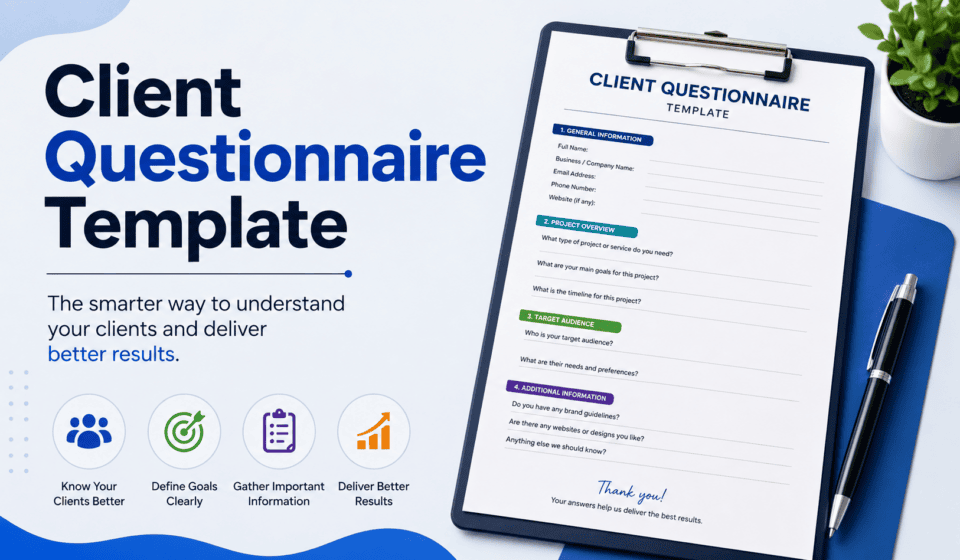
Free Client Questionnaire Template
Here is a simple structure you can adapt for almost any freelance service:
Client Information
- Full Name:
- Business Name:
- Email:
- Phone:
- Website:
- Social Media:
Business Information
- What does your business do?
- What products or services do you offer?
- Who is your ideal customer?
- Who are your main competitors?
- What makes your business different?
Project Information
- What service do you need?
- Why are you starting this project?
- What problem are you trying to solve?
- What are your primary goals?
- What deliverables do you need?
Audience
- Who is your target audience?
- What are their main needs?
- What action do you want them to take?
Preferences
- What style do you prefer?
- Do you have examples you like?
- Are there specific colors, fonts, or design elements you prefer?
- Are there any styles you want to avoid?
Timeline
- When would you like the project to begin?
- When would you like it completed?
- Is there a fixed deadline?
Budget
- What is your estimated budget?
Additional Information
- Is there anything else we should know?
- Do you have files, documents, images, or examples to share?
Client Questionnaire vs. Client Brief
Although these terms are sometimes used interchangeably, they can have different purposes.
A client questionnaire is primarily designed to collect information from the client.
A client brief is usually a summarized project document containing the key requirements, objectives, audience, deliverables, timeline, and other important information.
A common workflow is:
Questionnaire → Discovery → Client Brief → Proposal → Agreement → Project
This process can help create a more organized client experience.
Use the Questionnaire During Client Onboarding
A client questionnaire works best when it is part of a complete onboarding system.
A professional workflow might look like this:
Step 1: Initial Inquiry
The potential client contacts you.
Step 2: Qualification
You determine whether the project is a good fit.
Step 3: Questionnaire
The client provides detailed project information.
Step 4: Discovery Call
You discuss important details and clarify questions.
Step 5: Proposal
You create a proposal based on the client’s requirements.
Step 6: Contract and Payment
The client signs the agreement and pays the required deposit.
Step 7: Project Kickoff
You begin the project with clearly defined goals and deliverables.
This process makes your business look more professional and reduces unnecessary confusion.
Final Thoughts
A client questionnaire template is one of the most useful tools a freelancer or service provider can add to their workflow.
It helps you understand your client’s business, identify project requirements, define goals, understand the target audience, clarify expectations, and collect important information before work begins.
The key is not to create the longest questionnaire possible. Instead, create a questionnaire that asks the right questions.
Start with basic information, then ask about the business, project, audience, goals, preferences, timeline, budget, and required deliverables. Customize the questions according to your specific service.
If you are a web designer, for example, focus on website goals, pages, features, content, branding, and target customers. If you are a digital marketer, focus more on marketing goals, audience, competitors, existing campaigns, and desired results.
Once you create a reusable questionnaire template, you can use it for every new client and customize it when necessary.
A well-designed questionnaire can save time, reduce misunderstandings, improve project planning, and create a much more professional client experience.
The better you understand your client before starting, the better you can serve them after the project begins.