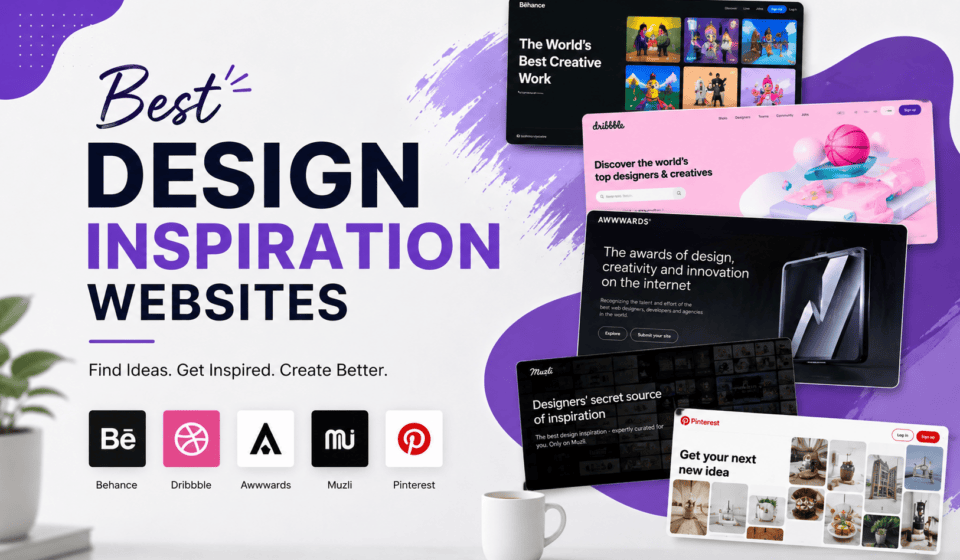

Finding fresh design ideas can be challenging, especially when you are working on a new website, landing page, portfolio, mobile app, or branding project. Fortunately, there are many excellent design inspiration websites where designers can discover creative layouts, color combinations, typography ideas, user interface patterns, animations, and complete website designs.
Whether you are a professional web designer, UI/UX designer, graphic designer, freelancer, student, or beginner, the right inspiration websites can help you overcome creative blocks and discover new approaches to your projects.
In this guide, we will explore some of the best design inspiration websites in 2026, what each platform is best for, and how you can use them effectively.
What Are Design Inspiration Websites?
Design inspiration websites are online platforms that collect, showcase, or curate creative work from designers, agencies, studios, and brands.
They can help you find inspiration for:
- Website layouts
- Landing pages
- UI/UX design
- Mobile apps
- Typography
- Color palettes
- Branding
- Logos
- Illustrations
- Animation
- E-commerce websites
- Portfolio websites
- SaaS websites
- WordPress websites
- Creative agency websites
Some platforms focus on complete live websites, while others showcase individual design concepts or detailed case studies.
The most useful approach is not to copy a design. Instead, study why the design works, how information is organized, how users move through the page, and how visual elements support the business goal.
Why Designers Need Inspiration
Even experienced designers sometimes face creative blocks. Looking at quality design work can help you discover possibilities that you may not have considered.
Design inspiration can help you:
1. Discover New Layout Ideas
You can explore different approaches to hero sections, navigation menus, service sections, portfolios, pricing tables, testimonials, footers, and other website components.
2. Understand Current Design Trends
Design galleries make it easier to see emerging trends in typography, animation, layouts, colors, interactions, and visual storytelling.
3. Improve Your Design Skills
Instead of simply browsing, analyze successful designs. Ask yourself why the designer selected a particular font, spacing system, color combination, image style, or navigation structure.
4. Save Time
When you are starting a project from scratch, inspiration websites can give you a starting point. You do not have to invent every visual idea from zero.
5. Build Better Moodboards
You can collect examples from multiple websites and use them to create a visual direction before beginning your actual design.
15+ Best Design Inspiration Websites
Here are some of the most useful design inspiration platforms worth bookmarking.
1. Awwwards
Awwwards is one of the most recognized destinations for creative website inspiration.
The platform showcases outstanding websites and focuses heavily on creativity, visual design, interaction, development, and user experience. It is particularly useful when you want to study innovative websites rather than ordinary business templates.
Best for:
- Creative websites
- Agency websites
- Interactive experiences
- Animation inspiration
- Experimental layouts
- Web development inspiration
Awwwards can be especially useful when you want to push a project beyond a conventional layout.
However, remember that an award-winning website is not automatically the best solution for every business. Some highly experimental designs may prioritize visual impact over simplicity or conversion.
2. Behance
Behance is a massive creative portfolio platform where designers and creative professionals showcase their work.
Unlike websites that focus exclusively on live websites, Behance contains projects from many creative disciplines, including graphic design, branding, UI/UX, illustration, photography, typography, packaging, and motion design.
One of its biggest advantages is that designers often publish complete project presentations rather than a single screenshot.
Best for:
- UI/UX projects
- Branding
- Graphic design
- Case studies
- Typography
- Creative portfolios
- Design process inspiration
If you want to understand how a designer developed a project from concept to final result, Behance is an excellent place to explore.
3. Dribbble
Dribbble is one of the most popular online communities for designers.
Designers use Dribbble to showcase UI concepts, website designs, mobile interfaces, illustrations, logos, icons, and other creative work.
It is particularly useful when you need inspiration for a specific component.
For example, you could search for:
- Hero section
- Pricing page
- Dashboard
- Login page
- Mobile app
- E-commerce UI
- Portfolio website
- SaaS landing page
Best for:
- UI design
- Website components
- Mobile app interfaces
- Dashboard designs
- Visual concepts
- Creative experiments
Dribbble is excellent for exploring visual ideas, but remember that some designs are concepts rather than complete, functioning products.
4. SiteInspire
SiteInspire is a curated collection of website designs.
It is particularly useful when you want to study real website layouts and discover different styles, industries, and visual approaches.
Compared with some highly experimental design galleries, SiteInspire can be a practical resource for designers looking for real-world website inspiration.
Best for:
- Website layouts
- Minimal websites
- Business websites
- Portfolio websites
- Creative websites
- Typography inspiration
If you are designing a professional website for a client, SiteInspire can help you find ideas that balance creativity and usability.
5. Godly
Godly has become a popular resource for discovering modern website designs.
It focuses heavily on visually interesting, contemporary websites and is useful for designers who want inspiration for typography, layouts, interactions, and brand-led digital experiences.
Best for:
- Modern websites
- Creative direction
- Typography
- Interactions
- Brand websites
- Contemporary layouts
Godly is particularly useful when you want designs that feel current and visually distinctive.
6. Land-book
Land-book is a useful source of website and landing-page inspiration.
Landing pages require a strong combination of visual design, content hierarchy, and conversion-focused structure. Land-book can therefore be particularly valuable for freelancers and marketers designing pages for businesses and startups.
Best for:
- Landing pages
- SaaS websites
- Startup websites
- Portfolio pages
- Product websites
- Marketing websites
If you are designing a landing page, pay attention not only to colors and images but also to the sequence of sections and calls to action.
7. Lapa Ninja
Lapa Ninja focuses heavily on landing-page inspiration.
It is useful when you need ideas for websites designed to communicate a product or service quickly.
You can study different approaches to:
- Hero sections
- Calls to action
- Pricing
- Testimonials
- Features
- Product presentations
- Lead-generation sections
Best for:
Landing page design and conversion-focused layouts.
For marketers and web designers, this can be especially useful because landing-page design needs to combine aesthetics with business objectives.
8. CSS Design Awards
CSS Design Awards is another excellent platform for discovering high-quality website designs.
The platform focuses on websites demonstrating strong creativity, user experience, and technical execution.
Best for:
- CSS inspiration
- Interactive websites
- Creative development
- UX inspiration
- Animation
- Experimental websites
Developers can also use these galleries to discover interesting approaches to animation and front-end implementation.
9. Mobbin
Mobbin is particularly useful for studying real-world product interfaces and user flows.
Instead of focusing only on attractive marketing websites, Mobbin helps designers examine interfaces and patterns used in digital products.
Best for:
- Mobile app UX
- Web app interfaces
- User flows
- Product design
- UI patterns
- SaaS interfaces
If you are designing an application rather than a traditional marketing website, Mobbin can be an extremely useful research resource.
10. One Page Love
One Page Love focuses on one-page website inspiration and related resources.
One-page websites can be challenging because you need to organize a significant amount of information without making the page feel overwhelming.
Best for:
- One-page websites
- Landing pages
- Portfolio websites
- Personal websites
- Small business websites
Study how successful one-page websites use spacing, visual hierarchy, sections, and navigation to guide visitors.
11. Muzli
Muzli is a design inspiration platform that helps designers discover creative work and design resources.
It can be useful when you want a continuous stream of visual inspiration rather than searching for a single website.
Best for:
- Daily inspiration
- UI design
- Graphic design
- Web design
- Creative resources
- Design trends
Muzli can be useful for maintaining a regular design-learning habit.
12. Httpster
Httpster is a curated gallery of website designs.
It is useful for browsing different website styles and discovering creative approaches to layout and visual presentation.
Best for:
- Website inspiration
- Minimal design
- Creative portfolios
- Typography
- Modern layouts
It can be particularly useful when you want alternatives to the heavily repeated design patterns found on mainstream inspiration platforms.
13. Pinterest
Pinterest is not exclusively a web design platform, but it remains useful for visual research.
You can find inspiration for:
- Color combinations
- Typography
- Branding
- Posters
- Packaging
- Interior design
- Photography
- Website layouts
- Moodboards
One advantage of Pinterest is that inspiration does not have to come from web design.
A designer can look at architecture, fashion, editorial design, photography, or packaging and transform those visual ideas into a completely different website concept.
14. Designspiration
Designspiration is designed for discovering and collecting visual inspiration.
It can be useful for exploring ideas across different creative disciplines rather than focusing exclusively on websites.
Best for:
- Moodboards
- Graphic design
- Color inspiration
- Photography
- Typography
- Visual research
It is particularly useful during the early stages of a creative project.
15. CSS Nectar
CSS Nectar is another website gallery focused on creative web design.
It can help designers discover examples of modern layouts, visual styles, and creative website experiences.
Best for:
- Website inspiration
- Creative layouts
- UI inspiration
- Typography
- Modern web design
Using several different galleries is often better than relying on only one because each platform has its own selection criteria and visual tendencies.
Best Design Inspiration Websites by Purpose
Choosing an inspiration website becomes easier when you know exactly what you are looking for.
| Your Goal | Recommended Websites |
|---|---|
| Award-winning websites | Awwwards, CSS Design Awards |
| UI design | Dribbble, Behance, Mobbin |
| Landing pages | Land-book, Lapa Ninja, One Page Love |
| Mobile UX | Mobbin |
| Graphic design | Behance, Designspiration |
| Creative websites | Awwwards, Godly |
| Minimal websites | SiteInspire, Httpster |
| Branding | Behance, Pinterest |
| Typography | Behance, Dribbble, SiteInspire |
| Moodboards | Pinterest, Designspiration |
| Web interaction ideas | Awwwards, Godly |
| SaaS inspiration | Land-book, Mobbin |
How to Use Design Inspiration Websites Effectively
Simply scrolling through hundreds of designs does not automatically make you a better designer.
The key is to study designs intentionally.
1. Start With a Specific Goal
Instead of searching for “website inspiration,” search for something more specific.
For example:
- Modern real estate website design
- SaaS landing page inspiration
- Fitness coach website
- Creative agency homepage
- WordPress portfolio design
- E-commerce product page
Specific searches produce more useful results.
2. Analyze the Structure
When you find a design you like, identify its structure.
Ask:
- Where is the main headline?
- How does the navigation work?
- Where is the primary CTA?
- How much whitespace is used?
- How are images positioned?
- How does the page guide the visitor?
- Where does the content become more detailed?
This teaches you design principles rather than encouraging you to copy a visual style.
3. Study Typography
Typography can dramatically change the personality of a website.
Look at:
- Font size
- Font weight
- Line height
- Letter spacing
- Heading hierarchy
- Paragraph width
- Font combinations
Try to understand why the typography works with the brand.
4. Study Color
Look beyond the obvious primary color.
Examine:
- Background colors
- Text colors
- Accent colors
- Button colors
- Borders
- Gradients
- Image treatments
You may discover useful color relationships that you can adapt to your own project.
5. Study Mobile Design
A website can look beautiful on a desktop but perform poorly on mobile.
Whenever possible, check the actual website and consider how its layout changes across screen sizes.
Look at:
- Mobile navigation
- Font scaling
- Button sizes
- Image cropping
- Section spacing
- Content order
6. Create a Reference Board
Save several examples instead of copying one.
For example, you might take:
- Navigation inspiration from one website
- Typography inspiration from another
- Color inspiration from a third
- CTA ideas from a fourth
- Portfolio layout inspiration from a fifth
Then combine those observations into an original design.
Inspiration Is Not the Same as Copying
One of the most important lessons for beginner designers is understanding the difference between inspiration and imitation.
You should not simply reproduce another designer’s website.
Instead, identify the underlying design principle.
For example, you might notice that a website uses:
Large typography + generous whitespace + minimal navigation
You can apply that principle to a completely different brand with different fonts, colors, imagery, content, and layout.
The goal is to learn from design decisions—not duplicate someone’s work.
How Web Designers Can Build an Inspiration Workflow
A simple workflow can make design research much more productive.
Step 1: Define the project
Understand the client’s industry, audience, goals, and brand.
Step 2: Find relevant examples
Search three to five inspiration platforms.
Step 3: Collect references
Save only designs that provide a specific useful idea.
Step 4: Categorize your references
Organize them into:
- Layout
- Typography
- Color
- Images
- Navigation
- Components
- Animation
- Mobile design
Step 5: Identify patterns
Look for common patterns across multiple successful websites.
Step 6: Create your own direction
Combine useful principles with the client’s brand identity.
Step 7: Test the design
Check usability, responsiveness, accessibility, performance, and conversion goals.
This process helps prevent endless scrolling and turns inspiration into actual design research.
Final Thoughts
The best design inspiration websites are valuable resources for anyone involved in web design, UI/UX, branding, or digital marketing. Platforms such as Awwwards, Behance, Dribbble, SiteInspire, Godly, Land-book, Lapa Ninja, and Mobbin provide different types of inspiration for different design challenges.
The important thing is to use these platforms strategically.
Don’t spend hours simply scrolling through beautiful websites. Instead, search for designs related to your specific project, analyze their structure, study their typography and color choices, and identify the design decisions that make them effective.
Most importantly, do not copy inspiration—understand it.
A strong designer can look at an existing design, understand the principles behind it, and create something original that solves a different problem.
Whether you are a beginner learning web design, a freelancer working on a client project, or an experienced designer looking for fresh ideas, keeping a carefully selected list of design inspiration websites can become one of the most useful parts of your creative workflow.
Frequently Asked Questions
What is the best website for web design inspiration?
Awwwards, Dribbble, Behance, SiteInspire, Godly, and Land-book are among the most useful options. The best choice depends on what you are designing.
What is the best website for UI design inspiration?
Dribbble, Behance, and Mobbin are excellent options for UI inspiration. Mobbin is particularly useful for studying real-world product interfaces and user flows.
Where can I find landing-page inspiration?
Land-book, Lapa Ninja, and One Page Love are useful resources for landing-page and one-page website inspiration.
Is it okay to copy a website design for inspiration?
You should not directly copy another designer’s work. Instead, study its layout, hierarchy, typography, spacing, and interaction patterns and use those lessons to create an original design.
How often should designers look for inspiration?
There is no fixed schedule. A short, focused research session before starting a project is generally more useful than endlessly scrolling through inspiration websites every day.
Can beginners use design inspiration websites?
Absolutely. Beginners can use these platforms to learn layout, typography, color, spacing, UI patterns, and visual hierarchy by studying professional work.
What should I look at when analyzing a website design?
Pay attention to the navigation, typography, color system, spacing, visual hierarchy, imagery, calls to action, responsiveness, accessibility, and overall user experience.