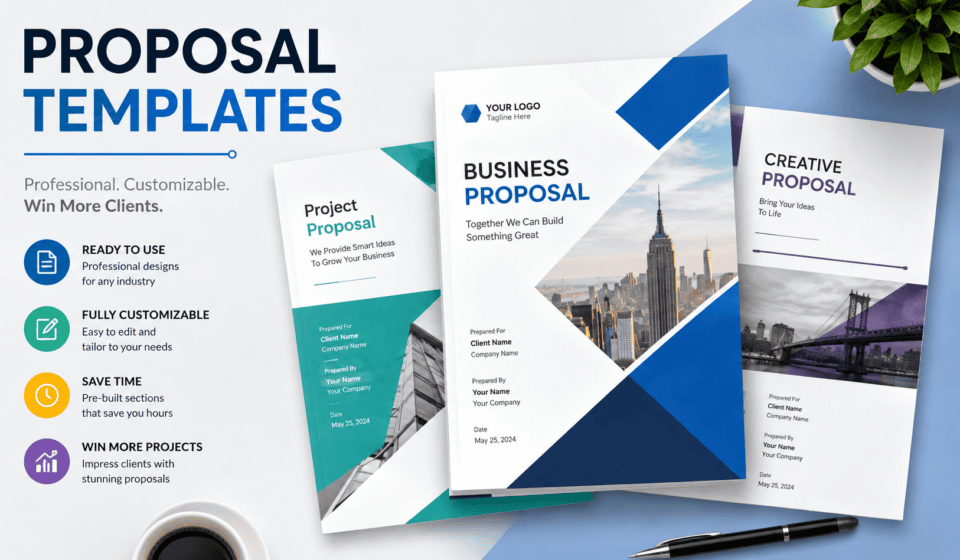

A professional proposal can be the difference between winning a new client and losing an opportunity. Whether you are a freelancer, web designer, digital marketer, consultant, agency owner, coach, or small business owner, a well-written proposal helps you communicate your value, explain your services, and convince potential clients to choose you.
Creating every proposal from scratch, however, can take a significant amount of time. This is where proposal templates become extremely useful.
A proposal template gives you a professional structure that you can customize for different clients and projects. Instead of starting with a blank document, you can use a ready-made format and focus your time on understanding the client’s needs and presenting the right solution.
In this guide, you’ll learn what proposal templates are, why they are important, what a professional proposal should include, how to customize a template, and how to create proposals that improve your chances of winning clients.
What Is a Proposal Template?
A proposal template is a pre-designed document that provides a structured format for presenting a business offer, service, project, or solution to a potential client.
A typical proposal template may include sections such as:
- Cover page
- Introduction
- Client needs or problems
- Proposed solution
- Scope of work
- Deliverables
- Project timeline
- Pricing
- Payment terms
- About the service provider
- Terms and conditions
- Call to action
- Contact information
Instead of creating these sections repeatedly, you can use a template and customize the information for each project.
For example, a web designer might have a website design proposal template. When a new client requests a website, the designer can duplicate the template, update the client’s name and requirements, modify the services and pricing, and send the completed proposal.
Why Are Proposal Templates Important?
A proposal is more than a document containing prices. It is an opportunity to demonstrate your professionalism and show a potential client that you understand their goals.
Proposal templates offer several important advantages.
1. Save Time
One of the biggest benefits of using a proposal template is time savings.
Writing a proposal from scratch for every client can take hours. A template provides the basic structure, allowing you to concentrate on project-specific information.
For freelancers who send multiple proposals every week, this can save a considerable amount of time.
2. Maintain Professionalism
A professionally designed proposal creates a stronger first impression.
A consistent structure, clear headings, organized pricing, and professional formatting can make your business appear more established and trustworthy.
Even if you are a new freelancer, a polished proposal can help you present yourself professionally.
3. Reduce Mistakes
Starting from scratch increases the possibility of forgetting important information.
A good template acts as a checklist. It reminds you to include important details such as deliverables, deadlines, payment terms, revisions, and project conditions.
4. Improve Consistency
If you operate an agency or work with a team, proposal templates help everyone follow the same structure.
Your proposals can maintain consistent branding, formatting, messaging, and pricing information.
5. Make Customization Easier
A template does not mean sending the exact same proposal to every client.
Instead, it gives you a starting point. You can customize the content based on the client’s industry, goals, budget, and project requirements.
What Should a Professional Proposal Include?
A successful proposal should provide enough information for a potential client to understand what you are offering and why they should work with you.
Here are the most important sections.
1. Cover Page
The cover page is the first part of your proposal that the client sees.
Keep it clean and professional. Include:
- Your business or personal brand name
- Client’s name or company
- Proposal title
- Project name
- Date
- Contact information
For example:
Website Design Proposal
Prepared for: ABC Company
Prepared by: Your Name
Date: August 2026
A simple cover page can immediately establish a professional appearance.
2. Introduction
The introduction should briefly explain why you are submitting the proposal.
Avoid making this section unnecessarily long. Focus on the client’s situation and objectives.
For example, a website designer could explain that the proposed project will create a modern, responsive website designed to improve the company’s online presence and generate more inquiries.
The introduction should make the client feel that the proposal was created specifically for them.
3. Understanding the Client’s Needs
This is one of the most important sections of a proposal.
Before discussing your services, demonstrate that you understand the client’s problem.
For example:
“The current website does not provide an optimal experience for mobile visitors and makes it difficult for potential customers to find important information. The new website will focus on responsive design, clear navigation, improved content structure, and stronger calls to action.”
This approach shows that you are selling a solution rather than simply selling a service.
4. Proposed Solution
After explaining the client’s problem, present your solution.
Describe what you will do and how your work will help achieve the client’s objectives.
For example, a digital marketing proposal might include:
- Search engine optimization
- Keyword research
- Content strategy
- On-page optimization
- Technical SEO improvements
- Performance monitoring
- Monthly reporting
Explain the value of each major service instead of simply listing tasks.
5. Scope of Work
The scope of work defines exactly what is included in the project.
This section helps prevent misunderstandings between you and the client.
For a website project, the scope might include:
- Website strategy
- Homepage design
- About page
- Services page
- Contact page
- Responsive design
- WordPress development
- Contact form
- Basic SEO setup
- Website testing
You should also clearly identify anything that is not included.
A detailed scope protects both the client and service provider.
6. Deliverables
Deliverables are the specific items the client will receive.
For example:
Website Design Project Deliverables
- 5-page responsive website
- Desktop and mobile layouts
- WordPress installation
- Contact form
- Basic on-page SEO
- Google Analytics setup
- Website launch support
Clear deliverables make the proposal easier to understand.
7. Project Timeline
Clients want to know when their project will be completed.
Provide a realistic timeline and divide large projects into stages.
For example:
Week 1: Research and project planning
Week 2: Design concepts
Week 3: Website development
Week 4: Testing and revisions
Week 5: Final approval and launch
Avoid promising an unrealistic deadline simply to win the project.
8. Pricing
Pricing should be clear and easy to understand.
Depending on your business, you can provide a fixed project price, hourly rates, packages, or monthly pricing.
For example:
| Service | Price |
|---|---|
| Website Strategy | $300 |
| Website Design | $800 |
| WordPress Development | $1,000 |
| Basic SEO Setup | $300 |
| Total | $2,400 |
If you offer packages, you can provide multiple options such as Basic, Professional, and Premium.
This gives clients flexibility and can make your primary package more attractive.
9. Payment Terms
Clearly explain how and when payments should be made.
For example:
- 50% deposit before work begins
- 25% payment after design approval
- 25% final payment before launch
You should also explain accepted payment methods and any applicable conditions.
Clear payment terms reduce confusion later in the project.
10. Revisions and Changes
Projects can become difficult when clients request unlimited changes.
Your proposal should explain how revisions work.
For example, you could include two rounds of design revisions. Additional revisions may be billed separately.
The exact policy depends on your business model, but it should be clearly stated before the project begins.
11. About You or Your Company
Use this section to explain why the client should trust you.
Include relevant information such as:
- Experience
- Skills
- Industry specialization
- Previous projects
- Certifications
- Client results
- Services
- Team information
Don’t make this section entirely about yourself.
Connect your experience to the client’s needs.
Instead of simply saying, “I have five years of experience,” explain how that experience can benefit the project.
12. Portfolio and Case Studies
If possible, include examples of previous work.
A portfolio can provide evidence that you can deliver the results described in your proposal.
For a web designer, this could include screenshots and links to previous websites.
For a marketer, it could include case studies showing improvements in traffic, leads, conversions, or other relevant metrics.
Keep the examples relevant to the client’s project.
13. Terms and Conditions
Your proposal should include important project conditions.
Depending on your business, these may cover:
- Payment requirements
- Ownership of completed work
- Cancellation
- Refunds
- Revisions
- Client responsibilities
- Project delays
- Confidentiality
- Third-party services
- Maintenance
- Additional work
For larger projects, consider having the agreement reviewed by a qualified legal professional.
14. Call to Action
Don’t finish your proposal without telling the client what to do next.
Your call to action could be:
“To begin the project, please review the proposal and confirm your approval. Once the agreement is accepted and the initial payment is received, we will schedule the project kickoff.”
A clear next step makes it easier for the client to move forward.
Types of Proposal Templates
Different businesses need different types of proposals.
Here are some popular examples.
Business Proposal Templates
Business proposal templates are designed for companies offering products, services, partnerships, or solutions to other businesses.
Freelance Proposal Templates
Freelancers can use templates for web design, graphic design, writing, programming, marketing, consulting, and other services.
Web Design Proposal Templates
These templates are useful for presenting website design and development services.
They can include pages, features, functionality, hosting, maintenance, SEO, pricing, and timelines.
Digital Marketing Proposal Templates
Digital marketers can create templates for SEO, social media marketing, paid advertising, email marketing, content marketing, and marketing strategy.
Consulting Proposal Templates
Consultants can use templates to explain their approach, deliverables, timeline, consulting fees, and expected outcomes.
Project Proposal Templates
Project proposals are useful for larger projects that require detailed planning, milestones, resources, and budgets.
Sponsorship Proposal Templates
Organizations, event planners, creators, and businesses can use sponsorship proposals to present partnership opportunities to potential sponsors.
How to Customize a Proposal Template
Using a template doesn’t mean sending identical documents to every potential client.
Customization is essential.
Start by changing the client’s name and company information. Then update the introduction to address the client’s specific situation.
Next, modify the scope of work and deliverables based on the actual project.
Your pricing should also reflect the client’s requirements.
Finally, review the entire proposal before sending it. Remove irrelevant sections and make sure there are no placeholder names, incorrect prices, or outdated information.
A proposal should feel like it was created specifically for the person reading it.
Tips for Creating Better Proposals
Focus on the Client
Your proposal should focus more on the client’s goals than on your business.
Explain how your services can solve their problems.
Keep It Easy to Read
Avoid huge blocks of text.
Use:
- Headings
- Bullet points
- Tables
- Short paragraphs
- White space
- Clear pricing sections
Good formatting makes important information easier to find.
Use Professional Branding
Your proposal should match your brand.
Consider using your:
- Logo
- Brand colors
- Typography
- Business name
- Contact information
Consistent branding makes your proposal look more professional.
Be Specific
Avoid vague statements such as “We will provide excellent service.”
Instead, explain exactly what you will provide.
Specific information builds confidence.
Don’t Overpromise
Only promise results that you can reasonably deliver.
Overpromising may help you win a project initially, but it can damage your reputation if expectations aren’t met.
Make Pricing Transparent
Clients should not have to search through multiple pages to understand your pricing.
Use clear tables or package sections when appropriate.
Proofread Before Sending
Spelling and grammar mistakes can make even a good proposal appear unprofessional.
Always proofread the document before sending it to a client.
Proposal Templates for Freelancers
Proposal templates are especially valuable for freelancers.
A freelancer may need to respond to multiple project opportunities every week. Creating a custom proposal from scratch for every opportunity can consume valuable working time.
A reusable freelance proposal template can contain:
- Introduction
- Understanding of the project
- Proposed solution
- Services
- Deliverables
- Timeline
- Pricing
- Relevant portfolio
- Terms
- Next steps
The freelancer can then customize the most important sections for each client.
For example, a web designer can maintain separate templates for small business websites, eCommerce websites, landing pages, and website redesign projects.
This creates a faster and more organized proposal process.
Free Proposal Templates vs. Premium Templates
There are both free and premium proposal templates available.
Free templates can be useful for beginners and small projects. They provide a basic structure without requiring an investment.
Premium templates may offer more advanced designs, additional layouts, editable sections, branding options, and specialized formats.
The best choice depends on your needs.
If you frequently send proposals to clients, investing in a professionally designed template can save time and improve the presentation of your business.
Common Proposal Mistakes to Avoid
Even a professional template can produce poor results if it is used incorrectly.
Avoid these common mistakes:
Sending the same proposal to everyone: Personalize every proposal.
Making the proposal too long: Include useful information, but remove unnecessary content.
Focusing only on yourself: Explain how your services benefit the client.
Unclear pricing: Make costs easy to understand.
Missing deadlines: Provide a realistic project timeline.
No clear next step: Tell the client how they can approve the proposal.
Ignoring client requirements: Carefully review the project brief before preparing your proposal.
Final Thoughts
A professional proposal is one of the most useful tools for freelancers, agencies, consultants, and service businesses that want to win more clients.
Proposal templates make the process faster, more organized, and more consistent. Instead of starting from a blank page every time, you can use a proven structure and customize it for each project.
The best proposal isn’t necessarily the longest or most complicated document. It is the one that clearly demonstrates that you understand the client’s needs, provides a practical solution, explains the scope and pricing, establishes expectations, and makes the next step easy.
If you’re a freelancer or business owner, creating a collection of professional proposal templates for your most common services can save hours of work and help you respond to opportunities more efficiently.
Start with one strong template, customize it for every client, continuously improve it based on your results, and make sure every proposal communicates one simple message: you understand the client’s problem, and you have a clear plan to solve it.