
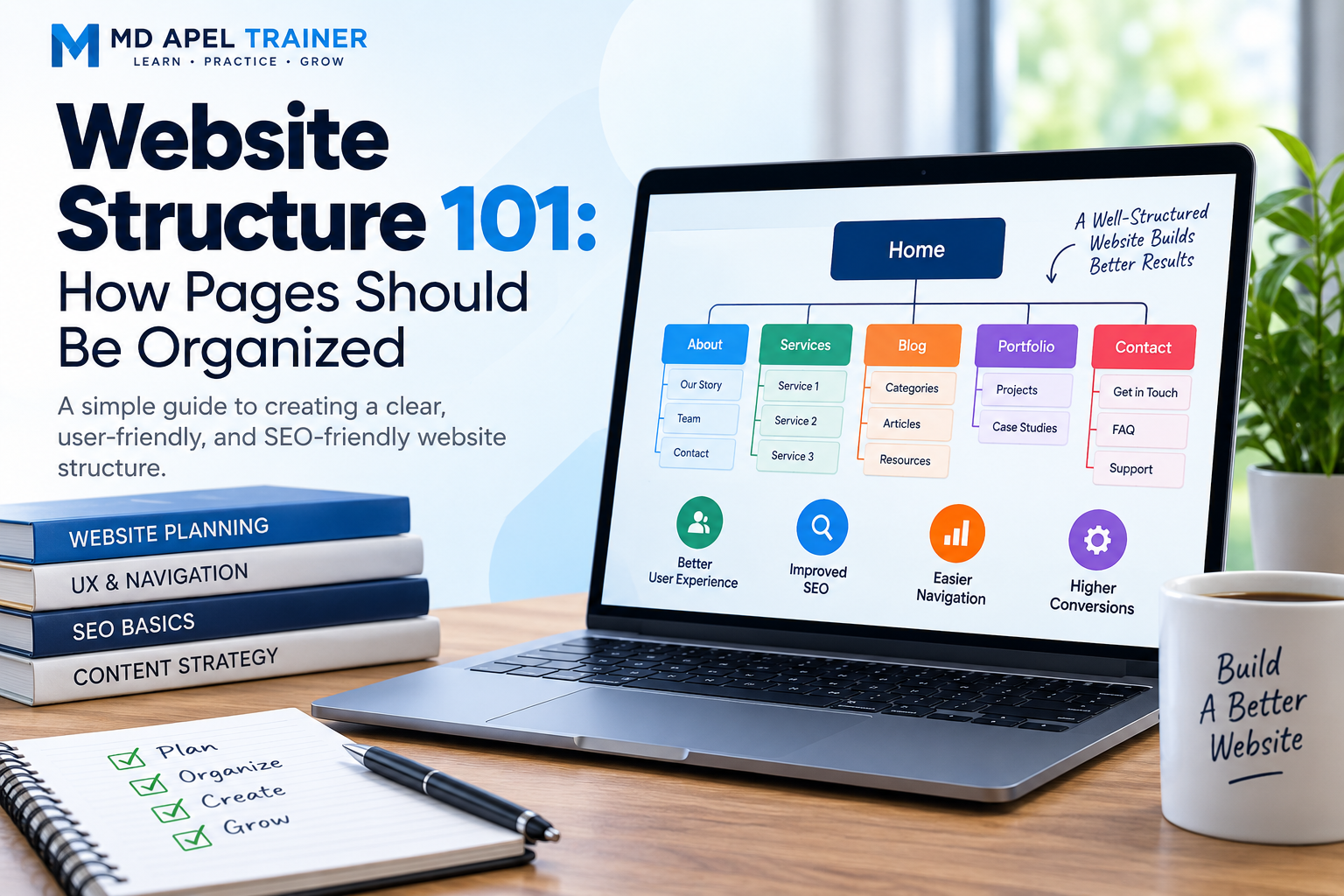
Before you pick colors or fonts, a website needs a skeleton. Structure is the invisible framework that decides whether visitors find what they need in seconds or give up and leave. Get it right early, and everything else – navigation, SEO, even content writing – becomes easier.
Start With Your Visitor’s Goal, Not Your Org Chart
A common beginner mistake is structuring a site the way a business is organized internally (Departments, Services, About, Team) instead of the way a visitor thinks (What do I need? Where do I go next?). Before drawing a single wireframe, list the three to five tasks visitors most often come to do, and build the structure around those tasks.
Use a Shallow Hierarchy
Most useful information should be reachable within two or three clicks from the homepage. A structure that’s too deep buries content and hurts both usability and SEO, since search engines treat deeply nested pages as less important.
- Homepage → Category → Page is usually enough for small to medium sites.
- Avoid categories that only contain one page – merge them instead.
- Group related content so visitors can browse naturally, not just search.
Plan Navigation Labels Carefully
Menu labels should describe content the way visitors search for it, not the way your team talks internally. “Pricing” beats “Investment Options.” “Blog” or “Guides” beats “Insights Hub.” Clear labels reduce confusion and bounce rate.
Map It Before You Build It
A simple sitemap – even a hand-drawn diagram or a spreadsheet listing every planned page and where it sits in the hierarchy – saves hours of restructuring later. It also makes it obvious where duplicate or unnecessary pages might creep in.
Structure Supports SEO Too
A clean, logical structure makes internal linking natural, which helps search engines crawl and understand your site. Pages that are easy for humans to find are usually easy for search engines to find as well.
Good structure is rarely noticed by visitors – that’s the point. It quietly makes every other part of your website work better.