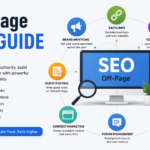


Off-Page SEO Guide
If you’ve already optimized your website with excellent content, fast loading speeds, and proper keywords, you’re only halfway through your SEO journey. The next step is Off-Page SEO—the process of improving your website’s authority, trust, and popularity outside your website.
Google doesn’t rank websites solely based on what happens on your pages. It also evaluates how other websites and users interact with your content. When authoritative websites link to you, people mention your brand online, and users engage with your content across the web, search engines view your website as more trustworthy.
This comprehensive guide explains everything you need to know about Off-Page SEO, from beginner concepts to advanced strategies.
What Is Off-Page SEO?
Off-Page SEO refers to all optimization activities performed outside your website to improve your search engine rankings.
Unlike On-Page SEO, which focuses on content and website optimization, Off-Page SEO builds your site’s reputation across the internet.
Think of it this way:
- On-Page SEO tells Google what your website is about.
- Off-Page SEO tells Google why your website deserves to rank.
The stronger your online reputation, the higher your chances of ranking for competitive keywords.
Why Off-Page SEO Matters
Google’s algorithm considers hundreds of ranking factors.
Among them, backlinks and website authority remain some of the most influential.
Benefits of Off-Page SEO include:
- Higher Google rankings
- Increased website authority
- More organic traffic
- Better brand recognition
- Increased trustworthiness
- More referral traffic
- Higher domain authority
- Improved indexing
Without Off-Page SEO, even excellent content may struggle to rank.
The Difference Between On-Page and Off-Page SEO
| On-Page SEO | Off-Page SEO |
|---|---|
| Website optimization | External optimization |
| Keyword optimization | Link building |
| Internal linking | Brand mentions |
| Meta tags | Guest posting |
| Content quality | Social sharing |
| Website speed | Online reputation |
Both work together to improve rankings.
Core Elements of Off-Page SEO
1. Link Building
Link building is the process of getting other websites to link back to your website.
These links are called backlinks.
Google treats backlinks as votes of confidence.
The more quality backlinks your website receives, the more authority it gains.
Types of Backlinks
Natural Backlinks
These happen when other websites voluntarily link to your content.
Example:
A blogger references your SEO checklist because it provides useful information.
These are the most valuable backlinks.
Manual Backlinks
You actively request these through outreach.
Examples include:
- Guest posting
- Resource pages
- Business directories
- Blogger outreach
Self-Created Backlinks
These are links you create yourself.
Examples include:
- Forum profiles
- Blog comments
- Social media profiles
Although they still have value, they carry less weight than editorial links.
Characteristics of High-Quality Backlinks
Not all backlinks are equal.
Good backlinks come from websites that are:
- Relevant
- Authoritative
- Trusted
- Indexed
- Receiving real traffic
- Contextually related
- Editorially placed
Poor-quality backlinks can actually harm rankings.
Guest Posting
Guest blogging remains one of the safest Off-Page SEO strategies.
Write valuable articles for websites within your industry.
Benefits include:
- High-quality backlinks
- Referral traffic
- Brand awareness
- Networking opportunities
Always prioritize quality over quantity.
Digital PR
Digital PR combines traditional public relations with SEO.
Examples include:
- Newsworthy content
- Original research
- Surveys
- Industry reports
- Infographics
Journalists often reference unique data and provide backlinks.
Brand Mentions
Google increasingly recognizes brand mentions, even without hyperlinks.
For example:
Instead of linking to your website, a blog may simply mention your business name.
Consistent positive mentions improve authority.
Social Media Marketing
Social signals are not direct ranking factors.
However, social media can increase:
- Content visibility
- Website traffic
- Brand awareness
- Link opportunities
Platforms include:
- X (Twitter)
- YouTube
Promoting content across multiple platforms helps attract backlinks naturally.
Influencer Outreach
Partnering with influencers can expose your content to larger audiences.
Influencers may:
- Review your services
- Share your content
- Link to your website
- Mention your brand
Choose influencers relevant to your niche.
Local SEO Citations
For local businesses, citations are essential.
A citation is any online mention of your business’s:
- Name
- Address
- Phone number (NAP)
Popular directories include:
- Google Business Profile
- Bing Places
- Yelp
- Yellow Pages
Ensure your business information remains consistent across all platforms.
Online Reviews
Positive reviews build trust with both customers and search engines.
Encourage satisfied customers to leave reviews on:
- Trustpilot
- Industry-specific directories
Never purchase fake reviews.
Forum Participation
Participate in industry forums by answering questions and helping users.
Examples include:
- Quora
- Niche communities
Focus on adding value instead of spamming links.
Community Engagement
Join online communities related to your industry.
Helpful platforms include:
- Facebook Groups
- Slack communities
- Discord servers
- LinkedIn Groups
Active participation often leads to natural backlinks.
Broken Link Building
Find broken links on other websites.
Offer your own content as a replacement.
Benefits:
- Helps website owners
- Earns relevant backlinks
- Improves relationships
This strategy has a high success rate when done properly.
Resource Page Link Building
Many websites maintain resource pages.
Contact site owners and suggest your valuable content if it fits their list.
This is one of the safest white-hat SEO techniques.
Content Marketing
The better your content, the easier link building becomes.
Create:
- Ultimate guides
- Original research
- Infographics
- Free tools
- Templates
- Checklists
- Videos
- Case studies
People naturally link to valuable resources.
Podcast Guest Appearances
Appearing on podcasts can provide:
- Brand exposure
- Referral traffic
- Authority
- Backlinks
Many podcast websites include guest profile links.
Video Marketing
Video content attracts links and shares.
Popular platforms include:
- YouTube
- Vimeo
- TikTok
Repurpose blog content into educational videos.
Infographic Marketing
Visual content performs well online.
Create informative infographics and encourage websites to share them with attribution.
Email Outreach
Successful outreach includes:
- Personalized emails
- Relevant content
- Clear value proposition
- Professional tone
Avoid sending mass generic emails.
Competitor Backlink Analysis
Study competitors ranking above you.
Identify:
- Their backlinks
- Guest posts
- Resource pages
- Mentions
Then pursue similar opportunities.
Linkable Assets
Some content naturally attracts backlinks.
Examples include:
- Free SEO tools
- Calculators
- Templates
- Statistics pages
- Industry reports
- Comprehensive tutorials
These assets generate backlinks for years.
White Hat vs Black Hat Off-Page SEO
White Hat SEO
Safe strategies include:
- Quality content
- Guest blogging
- Digital PR
- Outreach
- Natural link building
These comply with Google’s guidelines.
Black Hat SEO
Avoid:
- Buying backlinks
- Private Blog Networks (PBNs)
- Link farms
- Automated backlinks
- Hidden links
- Spam comments
These can result in Google penalties.
Common Off-Page SEO Mistakes
Avoid these mistakes:
- Buying cheap backlinks
- Using irrelevant websites
- Ignoring content quality
- Excessive anchor text optimization
- Low-quality directories
- Link exchanges
- Spam forum posting
- Duplicate guest posts
Quality always beats quantity.
Measuring Off-Page SEO Success
Monitor key metrics such as:
- Organic traffic
- Keyword rankings
- Referring domains
- Backlink quality
- Domain Authority (DA)
- Domain Rating (DR)
- Referral traffic
- Brand mentions
- Social engagement
Track progress monthly rather than daily.
Best Practices for Off-Page SEO
Follow these proven practices:
- Publish exceptional content consistently.
- Build relationships with industry experts.
- Focus on earning—not buying—links.
- Diversify your backlink profile.
- Monitor harmful backlinks regularly.
- Keep your brand active on social media.
- Update valuable content frequently.
- Create assets that naturally attract citations.
Consistency is the key to long-term success.
Off-Page SEO Checklist
Use this checklist before and during your campaigns:
- Publish high-quality content.
- Build backlinks from relevant websites.
- Earn editorial mentions.
- Submit to trusted directories.
- Optimize your Google Business Profile.
- Encourage customer reviews.
- Promote content on social media.
- Participate in relevant communities.
- Track backlinks and rankings.
- Disavow toxic links if necessary.
Final Thoughts
Off-Page SEO is about building trust, authority, and credibility across the web. While creating exceptional content is essential, earning recognition from other websites, brands, and users is what truly strengthens your search visibility.
A sustainable Off-Page SEO strategy focuses on quality over quantity. Prioritize valuable content, genuine relationships, and ethical link-building techniques instead of shortcuts. Over time, these efforts can lead to stronger rankings, increased organic traffic, and long-term growth for your website.
Whether you’re a blogger, business owner, or digital marketer, investing consistently in Off-Page SEO will help your site stand out in an increasingly competitive search landscape.
Frequently Asked Questions (FAQs)
What is Off-Page SEO?
Off-Page SEO includes activities performed outside your website—such as earning backlinks, brand mentions, and reviews—to improve search engine rankings.
Are backlinks still important in 2026?
Yes. High-quality, relevant backlinks remain one of the strongest signals of authority and trust for search engines.
How long does Off-Page SEO take to show results?
It typically takes several weeks to several months, depending on your competition, backlink quality, and overall SEO strategy.
Can social media improve SEO?
Social media does not directly affect rankings, but it can increase content visibility, referral traffic, brand awareness, and opportunities to earn backlinks.
Is buying backlinks a good strategy?
No. Purchasing backlinks violates Google’s guidelines and can lead to penalties. Focus on earning links naturally through valuable content and outreach.
